
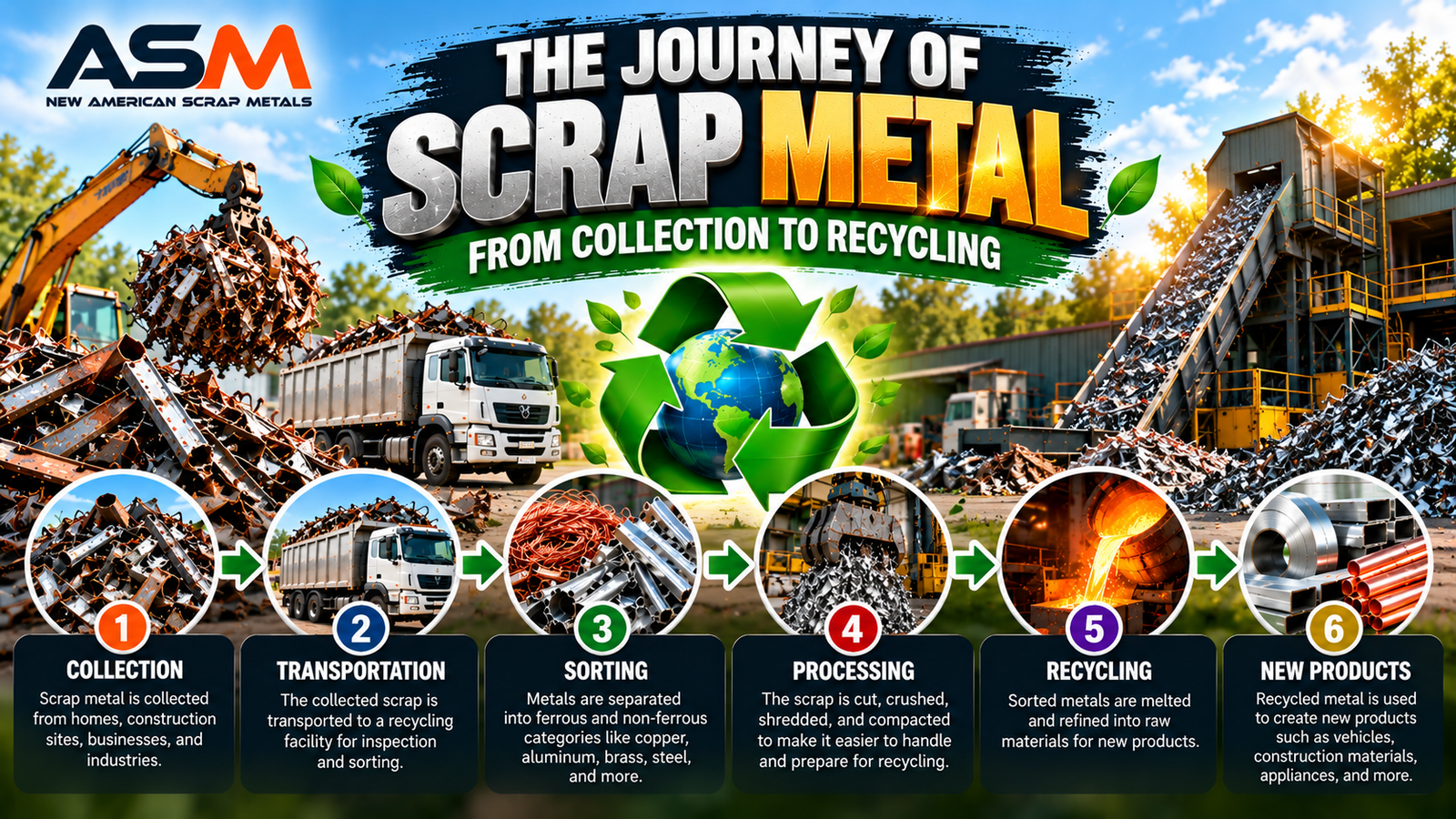
Every day, in Scrap Metal Recycling tons of metal are discarded from homes, construction sites, businesses, manufacturing facilities, and renovation projects. But much of this material is not simply waste. Scrap metal can be collected, sorted, processed, and recycled into useful materials for new products.
Understanding the Scrap Metal Recycling process helps homeowners, contractors, and businesses make better decisions about unwanted metal. For residents and businesses in Huffman, TX, and the surrounding Houston area, recycling scrap metal is also a practical way to reduce waste while recovering value from materials that are no longer needed.
So, what happens to scrap metal after it leaves your home or job site? Let’s follow its journey from collection to recycling.
What Is Scrap Metal Recycling?
Scrap metal recycling is the process of recovering metal from unwanted or discarded items and preparing it for reuse.
Instead of sending valuable materials to a landfill, recyclable metal can be collected and separated based on its type. It is then processed and prepared to become raw material for manufacturing.
Common recyclable metals include:
- Copper
- Aluminum
- Brass
- Steel
- Iron
- Stainless steel
- Motors and metal components
- Electrical scrap
- Metal from appliances and equipment
The recycling process allows these materials to remain useful instead of becoming unnecessary waste.
1. Scrap Metal Collection
The journey begins with scrap metal collection.
Scrap Metal Recycling can come from many different sources, including residential clean outs, construction projects, demolition work, remodeling, businesses, industrial operations, and old equipment.
For example, a contractor working on a renovation project may collect copper wiring, steel framing, aluminum components, pipes, and other metal materials. A homeowner may have an old appliance, metal shelving, tools, or unwanted equipment.
Instead of throwing these items into general waste, they can be separated and prepared for recycling.
Proper collection is important because keeping recyclable metal out of the waste stream is the first step toward recovering its value.
2. Transportation to a Recycling Facility
Once Scrap Metal Recycling has been collected, it needs to be transported to a scrap metal buyer or recycling facility.
Small amounts can often be transported by homeowners or contractors, while larger quantities may require appropriate vehicles or pickup services.
When transporting scrap, it is helpful to keep different materials organized. For example, copper should be kept separate from steel and aluminum whenever practical.
This makes the next stage of the recycling process easier and helps ensure that different metals can be properly identified and evaluated.
3. Sorting Different Types of Metal
Sorting is one of the most important stages of metal recycling.
Not all metals have the same properties or recycling value. Scrap is therefore separated into different categories.
Ferrous Metals
Ferrous metals contain iron as their primary component. Common examples include:
- Iron
- Steel
- Cast iron
- Many types of stainless steel
These metals are widely used in construction, machinery, vehicles, appliances, and industrial equipment.
Non-Ferrous Metals
Non-ferrous metals generally do not contain iron as their primary component. Common examples include:
- Copper
- Aluminum
- Brass
- Bronze
- Zinc
Copper, brass, and aluminum are frequently found in electrical, plumbing, construction, and household materials.
Proper sorting allows each type of metal to be processed appropriately.
4. Cleaning and Preparing Scrap
After sorting, scrap metal may need to be prepared for processing.
Depending on the material, this can include removing unwanted attachments or separating metal from materials such as plastic, rubber, wood, or other non-metal components.
For example, electrical scrap may contain copper wire surrounded by insulation. Appliances can contain several different metals along with plastic and other materials.
The goal is to prepare the recyclable metal as efficiently as possible.
For people selling scrap, keeping materials organized and separating different metals before bringing them to a recycle can make the evaluation process easier.
5. Processing the Scrap Metal
Once metals have been sorted and prepared, they can be processed.
The exact process depends on the type and size of the material, but scrap metal may be:
- Cut
- Crushed
- Shredded
- Compacted
- Prepared for melting
Large and bulky pieces can be reduced into more manageable sizes. This makes the material easier to handle, transport, and process.
Processing also helps prepare the metal for the next stage of the recycling cycle.
6. Melting and Refining
After processing, recyclable metal can be sent through industrial recycling processes where it is melted and refined.
Different metals require different processing conditions.
The objective is to recover usable metal that can serve as a raw material for manufacturing.
One of the major advantages of metal recycling is that many metals can be recycled repeatedly without losing their fundamental material properties.
This means that a piece of scrap metal collected today can eventually become part of a completely different product.
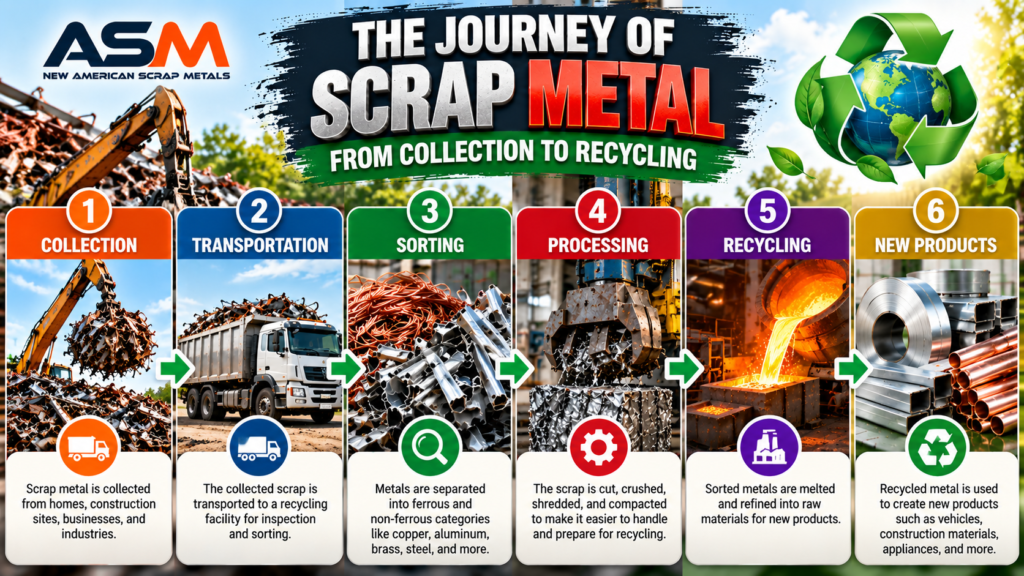
7. Recycled Metal Becomes New Products
This is where the journey of scrap metal comes full circle.
Once processed and prepared, recycled metal can become raw material for new manufacturing applications.
Recycled metals may eventually be used in products and materials such as:
- Automotive components
- Construction materials
- Machinery
- Appliances
- Electrical products
- Pipes and metal components
- Industrial equipment
An old piece of scrap that was once sitting in a garage, construction site, or warehouse can therefore become part of something new.
Why Is Scrap Metal Recycling Important?
The scrap metal recycling process provides several environmental and practical benefits.
Reduces Waste
Recycling keeps valuable metal out of landfills and gives unwanted materials another purpose.
Conserves Natural Resources
Using recycled metal can reduce the need to obtain new raw materials through mining and extraction.
Supports Manufacturing
Recycled metal can be used as a raw material in various manufacturing industries.
Keeps Communities Cleaner
Properly recycling unwanted metal helps reduce clutter from homes, businesses, construction sites, and industrial properties.
Recovers Value From Unwanted Materials
Some scrap metals have significant recycling value. Instead of treating unwanted metal as ordinary trash, owners can have it evaluated by a professional scrap metal buyer.
How Can Huffman, TX Residents Recycle Scrap Metal?
Residents in Huffman, TX, can start by identifying unwanted metal around their homes, garages, properties, or businesses.
Look for items such as:
- Old appliances
- Copper wiring
- Aluminum materials
- Brass fixtures
- Steel furniture
- Metal tools
- Motors
- Construction scrap
- Metal equipment
Whenever practical, separate different metals and keep recyclable materials organized.
If you have a large quantity of scrap, contact a local recycling company to ask about accepted materials and available services.
Scrap Metal Recycling for Contractors and Businesses
Contractors and businesses can generate significant amounts of scrap metal during construction, renovation, demolition, and maintenance projects.
Creating a basic sorting system at the job site can help workers separate copper, aluminum, brass, steel, and other recyclable materials as they work.
This can help reduce unnecessary waste and make scrap removal more organized.
For larger projects, businesses and contractors can also ask local scrap metal buyers about convenient collection or pickup options.
Recycle Scrap Metal With New American Scrap Metals
New American Scrap Metals helps homeowners, contractors, and businesses in Huffman, TX, and surrounding areas recycle unwanted metal.
We work with various types of recyclable materials, including:
- Copper
- Aluminum
- Brass
- Steel
- Motors
- Electrical scrap
- Appliances
- Other metal materials
Instead of throwing unwanted metal away, bring it to a local scrap metal recycling company and give those materials an opportunity for a second life.
Contact New American Scrap Metals
Address: 12855 FM 1960 Rd, Huffman, TX 77336
Phone: 253-355-1068
Email: ali@americanscrapmetals.com
Website: newamericanscrapmetals.com