
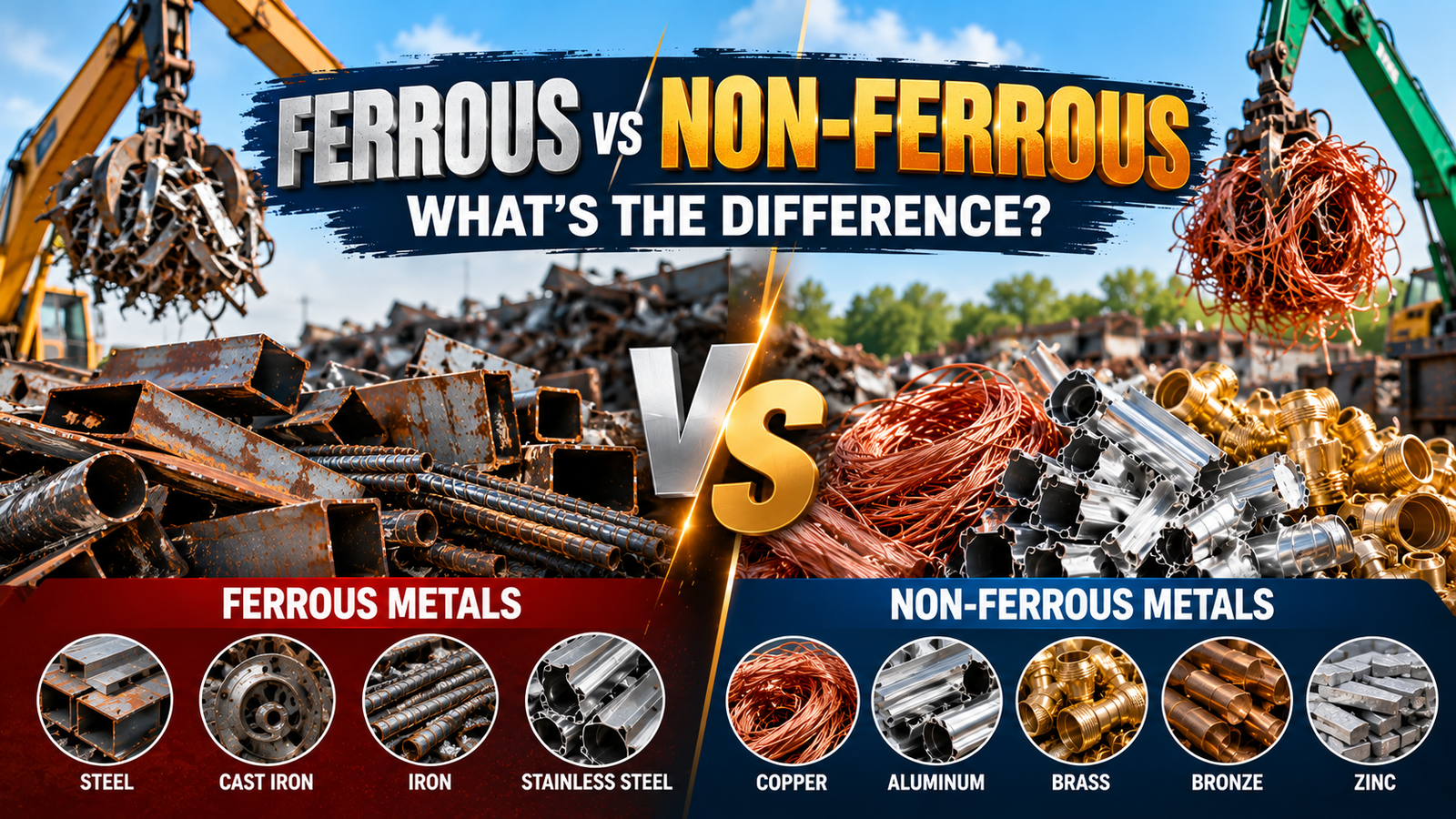
Ferrous vs Non-Ferrous Metals, Not all scrap metal is the same. When you’re preparing metal for recycling, one of the most important distinctions to understand is whether the material is ferrous or non-ferrous.
The difference can affect how the metal is identified, sorted, processed, and valued. Knowing what you have can also make it easier to work with a scrap metal buyer.
For homeowners, contractors, and businesses in Huffman, TX and the surrounding Houston area, understanding these two categories can make scrap recycling much simpler.
What Are Ferrous Metals?
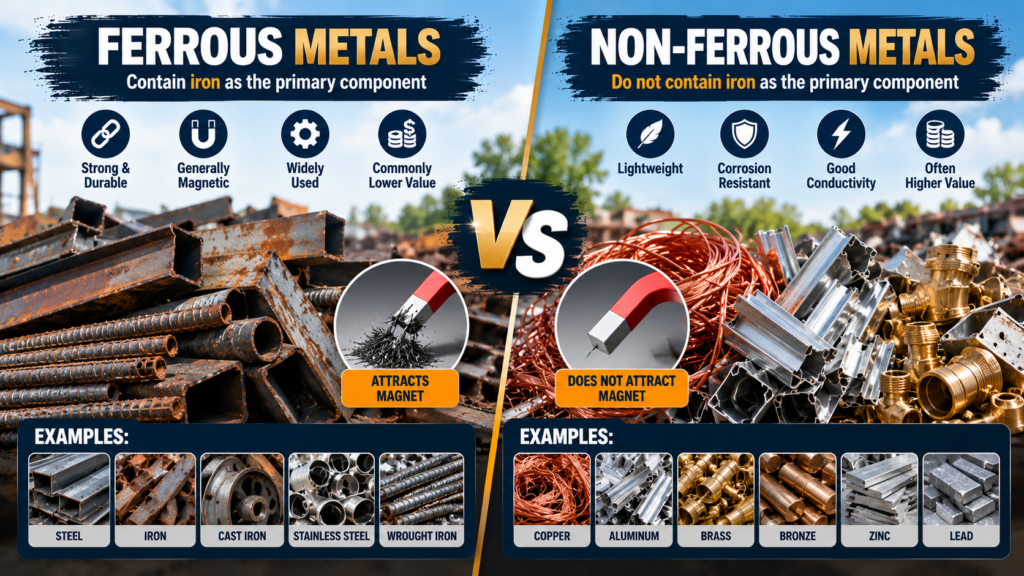
Ferrous metals are metals that contain iron as their primary component.
They are widely used because they are generally strong, durable, and suitable for construction and manufacturing.
Common ferrous metals include:
- Iron
- Carbon steel
- Cast iron
- Stainless steel
- Wrought iron
Common Ferrous Scrap
You may find ferrous metal in:
- Steel beams
- Pipes
- Machinery
- Automotive parts
- Construction equipment
- Tools
- Metal structures
- Appliances
Because ferrous metals are so common, they make up a large portion of the scrap metal stream.
What Are Non-Ferrous Metals?
Non-ferrous metals do not contain iron as their primary component.
Many non-ferrous metals are valued for properties such as corrosion resistance, conductivity, light weight, and durability.
Common non-ferrous metals include:
- Copper
- Aluminum
- Brass
- Bronze
- Zinc
- Lead
Common Non-Ferrous Scrap
Examples include:
- Copper wire
- Copper pipes
- Aluminum siding
- Aluminum frames
- Brass plumbing fixtures
- Brass fittings
- Electrical components
- Certain automotive parts
Ferrous vs Non-Ferrous Metals: Key Differences
| Feature | Ferrous Metals | Non-Ferrous Metals |
|---|---|---|
| Iron content | Usually contains iron | Generally does not contain iron |
| Magnetism | Many are magnetic | Generally non-magnetic |
| Strength | Often strong and durable | Often lighter and more corrosion-resistant |
| Common examples | Iron, steel, cast iron | Copper, aluminum, brass |
| Common uses | Construction, machinery, vehicles | Electrical, plumbing, transportation |
| Scrap examples | Steel beams, machinery | Copper wire, aluminum, brass |
There are exceptions, so a magnet test should be considered a simple identification aid rather than a definitive test for every metal.
How to Tell if Metal Is Ferrous or Non-Ferrous
One simple way to start identifying scrap metal is with a magnet.
If the Magnet Attracts the Metal
The material may be ferrous because many iron-based metals are magnetic.
Common examples include:
- Steel
- Iron
- Cast iron
If the Magnet Does Not Attract the Metal
The material may be non-ferrous.
Examples include:
- Copper
- Aluminum
- Brass
However, magnetism alone cannot identify every metal. Some stainless steels, for example, have different magnetic properties.
Why Does the Difference Matter When Recycling?
Understanding whether scrap is ferrous or non-ferrous helps with proper sorting.
Better Organization
Separating materials makes your scrap easier to inspect and process.
Accurate Evaluation
Different metals have different market values and recycling characteristics.
Easier Processing
Recycling facilities can process sorted materials more efficiently.
Potentially Better Value
Keeping higher-value non-ferrous metals separate from common ferrous scrap can help ensure they are evaluated according to their material type.
Which Is More Valuable: Ferrous or Non-Ferrous Metal?
In many cases, non-ferrous metals such as copper, brass, and aluminum can have higher scrap value than common iron and steel.
However, scrap prices vary based on:
- Metal type
- Grade
- Weight
- Cleanliness
- Market demand
- Current market conditions
For this reason, it’s better to identify and sort your materials rather than assuming every piece of metal has the same value.
Why Is Copper Considered a Valuable Scrap Metal?
Copper is a popular non-ferrous scrap metal because it is widely used in electrical and plumbing applications.
You can find copper in:
- Electrical cables
- Plumbing pipes
- HVAC components
- Motors
- Industrial equipment
If you have copper scrap, keeping it separate from other metals can make the evaluation process easier.
Why Is Aluminum Commonly Recycled?
Aluminum is lightweight, durable, and highly recyclable.
It can be found in:
- Cans
- Window frames
- Gutters
- Vehicle components
- Construction materials
- Machinery
Its widespread use makes aluminum an important part of the scrap recycling industry.
Tips for Sorting Scrap Metal
Before taking your scrap to a recycling company:
1. Separate Ferrous and Non-Ferrous Metals
Keep steel and iron separate from copper, aluminum, and brass whenever practical.
2. Sort Similar Metals Together
Create separate groups for copper, aluminum, brass, steel, and other materials.
3. Remove Unnecessary Materials
Where practical, remove plastic, rubber, wood, and other non-metal attachments.
4. Keep Valuable Metals Clean
Clean, properly sorted materials are easier to identify and evaluate.
5. Ask a Scrap Metal Buyer
If you’re unsure what type of metal you have, a professional scrap metal buyer can help identify and evaluate it.
Ferrous and Non-Ferrous Recycling in Huffman, TX
If you’re cleaning out a property, completing a construction project, or getting rid of old equipment, you may have a mixture of ferrous and non-ferrous scrap.
New American Scrap Metals helps homeowners, contractors, and businesses in Huffman, TX recycle various types of scrap metal.
Materials may include:
- Copper
- Aluminum
- Brass
- Steel
- Iron
- Motors
- Electrical scrap
- Appliances
- Other recyclable metal
Contact New American Scrap Metals
Address: 12855 FM 1960 Rd, Huffman, TX 77336
Phone: 253-355-1068
Email: ali@americanscrapmetals.com
Website: newamericanscrapmetals.com