
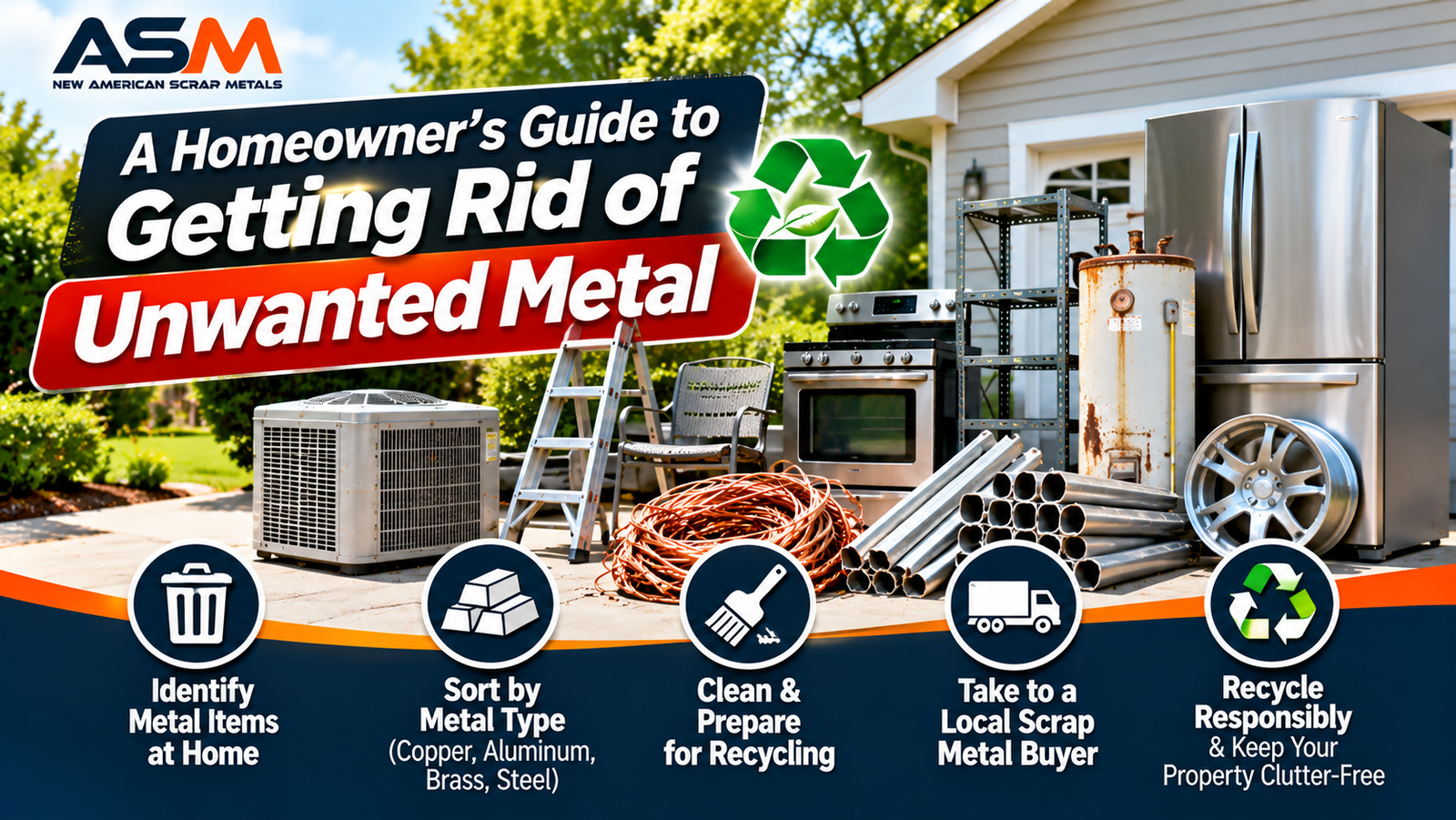
That old refrigerator sitting in the garage. A pile of rusty pipes behind the shed. Broken metal shelving, unwanted appliances, old tools, leftover renovation materials, or a bundle of unused copper wire by Getting Rid of Unwanted Metal.
At some point, every homeowner ends up with metal they no longer need.
The question is: What should you do with it?
Throwing unwanted metal in the trash may not be the best option. Many household metal items can be reused or recycled, and some may even have scrap value.
For homeowners in Huffman, TX, and the surrounding Houston area, understanding how to properly handle unwanted metal can help you clear space, reduce waste, and potentially recover value from materials that would otherwise sit unused.
Why You Shouldn’t Simply Throw Away Unwanted Metal
Metal is different from ordinary household waste.
Many metals can be recycled and processed into materials used to manufacture new products. When metal ends up in a landfill, a potentially useful resource is simply being discarded.
Recycling unwanted metal can help:
- Reduce unnecessary landfill waste
- Recover reusable materials
- Conserve natural resources
- Keep garages and properties cleaner
- Support the recycling industry
- Potentially put money back in your pocket
Instead of asking, “How do I get rid of this metal?” a better question may be:
“Can this metal be recycled or sold?”
Step 1: Identify What Kind of Metal You Have
Before deciding what to do with unwanted metal, take a quick look at what you’re dealing with.
Common household scrap metals include:
Copper
Copper can be found in:
- Electrical wiring
- Copper pipes
- Plumbing components
- HVAC materials
- Old equipment
Copper is widely recycled and is often separated from other scrap because of its material value.
Aluminum
Aluminum is lightweight and commonly found in:
- Window frames
- Gutters
- Cans
- Siding
- Household equipment
- Certain furniture and fixtures
Brass
Brass is commonly found in plumbing and hardware, including:
- Faucets
- Valves
- Fittings
- Locks
- Fixtures
Steel and Iron
These are some of the most common metals found around homes.
You may find steel or iron in:
- Appliances
- Shelving
- Tools
- Bed frames
- Machinery
- Outdoor furniture
- Construction materials
Knowing what you have is the first step toward determining how it should be recycled.
Step 2: Check Whether the Item Can Be Reused
Not every unwanted metal item needs to become scrap.
Before recycling something, ask yourself:
Could someone still use this?
A working refrigerator, metal shelf, bicycle, tool, or piece of equipment may be better suited for reuse, donation, or resale.
If an item is broken, damaged, outdated, or no longer practical to use, recycling may be the better option.
This simple step helps keep usable products in circulation while sending truly unwanted materials into the recycling stream.
Step 3: Separate Different Types of Metal
If you have a pile of mixed scrap, don’t worry—you don’t need to be an expert metalworker to start organizing it.
Create separate groups for:
- Copper
- Aluminum
- Brass
- Steel
- Iron
- Other recyclable metals
Keeping different metals separated makes the material easier to identify and evaluate.
A magnet can sometimes help distinguish many ferrous metals from non-ferrous metals. However, magnetism is not a perfect test because some stainless steels have different magnetic properties.
When you’re unsure, a professional scrap metal buyer can help identify the material.
Step 4: Remove Unnecessary Materials When Practical
Household items are often made from more than one material.
For example, an old appliance may contain metal, plastic, rubber, wiring, and other components.
Where it is safe and practical, separating obvious non-metal materials can make recycling easier.
However, don’t dismantle appliances, HVAC equipment, electrical equipment, or other potentially hazardous items simply to prepare them for scrap unless you know they can be handled safely.
When in doubt, ask your local recycle what preparation they recommend.
Step 5: Don’t Forget About Old Appliances
Appliances are some of the most common sources of household scrap metal.
You may have:
- Refrigerators
- Washing machines
- Dryers
- Ovens
- Microwaves
- Dishwashers
- Air conditioning equipment
These items can contain recyclable steel, aluminum, copper, and other materials.
Instead of leaving a broken appliance in your garage for years, find out whether a local scrap metal recycle accepts it.
For certain appliances and equipment, special handling may be required, so always confirm the requirements before transporting them.
Step 6: Look Around Your Garage and Backyard
You may have more recyclable metal than you realize.
Take a quick inventory of areas such as your:
Garage:
Old tools, shelving, equipment, wiring, appliances and metal parts.
Shed:
Garden tools, metal containers, equipment and hardware.
Backyard:
Old grills, patio furniture, bicycles, fencing and other metal items.
Workshop:
Cut-off pieces of metal, pipes, electrical materials, motors and machinery parts.
Renovation leftovers:
Copper wire, aluminum components, metal fixtures, pipes and construction scrap.
A weekend cleanup can turn a cluttered space into a surprisingly useful collection of recyclable materials.
Step 7: Store Your Scrap Safely
If you are collecting metal before taking it to a recycle, proper storage matters.
Keep your scrap:
- Organized
- Secure
- Away from children and pets
- Protected from unnecessary exposure to the elements
- Separated by metal type when possible
Be especially careful with sharp metal edges, heavy objects, and potentially hazardous equipment.
The goal isn’t just to collect more scrap—it’s to handle it responsibly.
Step 8: Find a Local Scrap Metal Buyer
Once you’ve identified and organized your unwanted metal, the next step is finding a reliable scrap metal buyer in Huffman, TX.
A good recycle should make the process straightforward.
Before choosing a company, consider:
- What types of metal do they accept?
- Do they provide accurate weighing?
- How do they evaluate different materials?
- Do they offer convenient services for larger loads?
- Is the business experienced in scrap metal recycling?
Working with a local buyer can make it easier to recycle household scrap without transporting materials long distances.
Can You Make Money From Unwanted Metal?
Potentially, yes.
The value of scrap metal depends on several factors, including:
- Type of metal
- Grade
- Weight
- Condition
- Cleanliness
- Current market conditions
Copper and brass, for example, generally have different market values than common steel or iron.
That’s why sorting your materials before selling can be helpful.
However, don’t assume that every metal item has a specific cash value. A professional recycle can evaluate the material and explain what they accept.
What About Large Amounts of Household Scrap?
Sometimes a homeowner isn’t dealing with one or two items—they’re clearing out an entire property.
This can happen during:
- Moving
- Estate clean outs
- Garage clean outs
- Home renovations
- Property renovations
- Demolition
- Major remodeling projects
Large clean outs can generate a mixture of appliances, metal furniture, pipes, equipment, wiring, and other materials.
If you have a large quantity, contact a local scrap metal recycling company before loading everything into your vehicle. You may be able to get guidance about accepted materials and available services.
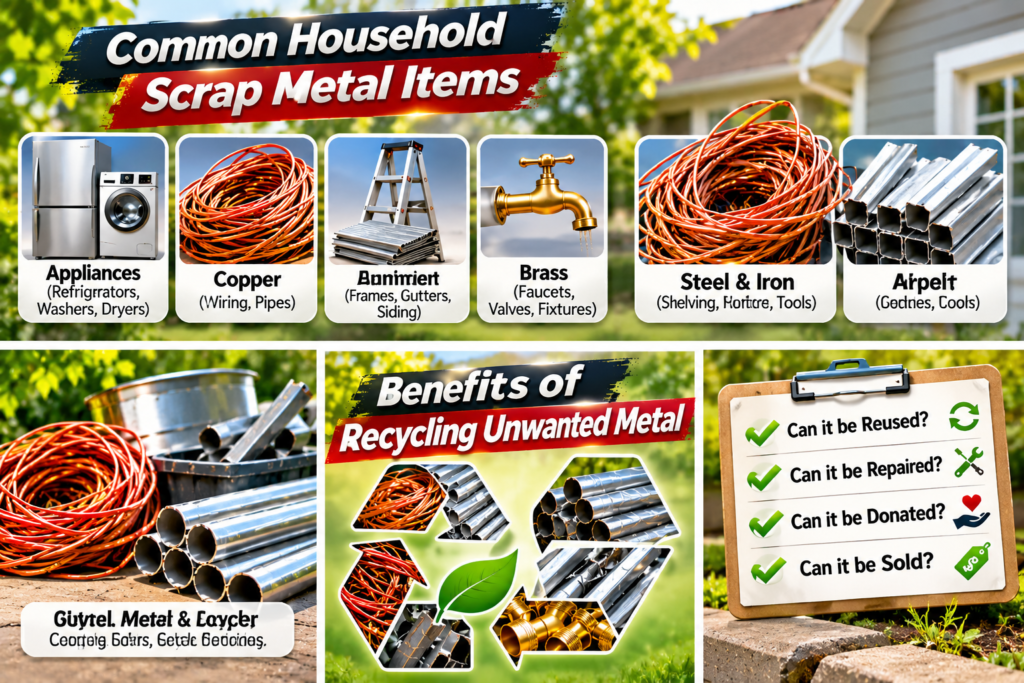
Why Scrap Metal Recycling Is Better Than Simply Throwing Metal Away
The benefits go beyond cleaning your garage.
When scrap metal is recycled, useful materials can return to the manufacturing cycle instead of becoming waste.
Recycling can help:
Reduce Landfill Waste
Metal that can be recovered doesn’t need to take up unnecessary landfill space.
Conserve Resources
Recycling existing metal can reduce the demand for newly extracted raw materials.
Support Manufacturing
Recovered metals can be processed and used in the production of new goods and materials.
Keep Your Property Cleaner
Removing unwanted metal can free up valuable space in garages, workshops, sheds, and other areas around your property.
Recycle Your Unwanted Metal in Huffman, TX
If you’re ready to clean out your garage, property, workshop, or business, New American Scrap Metals can help you find a responsible way to handle recyclable metal.
We work with homeowners, contractors, and businesses in Huffman, TX, and surrounding areas and accept various types of scrap materials, including:
- Copper
- Aluminum
- Brass
- Steel
- Motors
- Electrical scrap
- Appliances
- Other recyclable metal
Instead of letting unwanted metal collect dust or sending potentially recyclable materials to the trash, consider giving them a second life through recycling.
Contact New American Scrap Metals
Address:
12855 FM 1960 Rd, Huffman, TX 77336
Phone:
253-355-1068
Email:
ali@americanscrapmetals.com
Website:
newamericanscrapmetals.com